The best way to start a fairy tale is by using the words “Happily Ever After”.
That way the reader knows it’s fiction because there is no such condition.
Conversely, the optimum way to end it is to use the words “Once Upon A Time”.
The reader assumes the time isn’t now and the place isn’t next door.
Maybe that’s true.
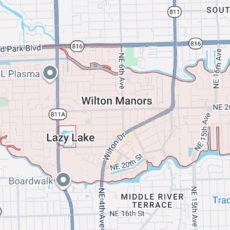
There is a place in Pompano, FL, a click or two north of The Island City, where mostly peaceful, mostly elderly folk live Happily Ever After in a 100-unit condominium. Building 67 is an old one by South Florida standards, built in the days when Jackie Gleason hung out at a local spa, and Frank Sinatra’s Rat Pack held forth some 40 miles south in Miami Beach.
As such, it is prone to an assortment of mythical characters that belong to different decades. This diversity is complicated by the fact the building is located at the nexus of an important crossroad: the ocean is east and the Everglades is west. The northern compass point is rich glossy Boca Raton, and the southern point peters out among old industrial and residential neighborhoods that end at the New River.
This location makes it ripe for a portal. The past and present exist concurrently, the building is heavy concrete block anchored by underground utilities, so it isn’t going anywhere, and there is just enough turnover in residents so that no one has a grasp of local history.
Each ghost is a new ghost; each situation is unprecedented; each story needs to be retold several times before consensus and conclusion are reached.
Building 67 also has two more prerequisites for a proper fairy tale: it has an Enchanted Forest and a screwy parking lot.
True, the trees are twisted short black olive trees that “female” all over the cars in the words of a resident, who doesn’t have enough time left in this dimension to mince words. That means they drop sap, leaves and bugs at will on the cars in the lot. They do, however, block traffic noise from the crossroad arteries and the tinkling of finger cymbals from the belly dancing at a nearby Lebanese restaurant on Wednesday nights.
The parking lot gaslights any logical unbeliever who wants to live in Building 67. For example, if you rent Unit 408, you’ll be assigned space number 602. 602’s owner will have to make do with a spot marked 213 in fading numbers, and all wheel-stops will be smothered by piles of leaves.
Friends, lovers and workmen use guest spots which are artfully if not carefully arranged around a dip in the lot which is a sinkhole-in-training.
It was in this parking lot during a recent summer solstice that a security guard noticed an anomaly just as an ancient analog clock on the wall of the swimming pool enclosure registered midnight. As she wheeled her golf cart around the corner closest to the Enchanted Forest, she saw a chubby, hairy guy wearing sneakers slip into the building following an Amazon delivery person who was privy to a code that unlocked the front door.
Pedal to the metal, the cart screamed up to the entrance but just wasn’t fast enough to catch up to the faun-like intruder.
The faun, who last appeared in this dimension sometime in the mid-1960s, was unaware that security cameras are a thing now. He found a small cart used by residents to transport groceries from their cars into their apartments and headed to the seventh floor where he stole a small Amazon package and placed it in the cart.
The intruder stripped off his clothes except for the sneakers which may have concealed cloven hooves, and then discharged every fire extinguisher on the floor, and exited the lobby. Security footage from those dramatic moments shows him covering his nether region with his hands and looking around for witnesses while ignoring the cameras.
Spoiler alert: the guard called the cops at this point.
He spent a few minutes until the police arrived placidly walking around the parking lot pushing the cart.
“What are you doing?” the cop asked.
“The package was lonely. I was taking it for a walk,” said the faun.
“Once upon a time,” said a condo board elder (who checked the footage with a magnifying glass three times to make sure it wasn’t her 85-year-old husband causing mischief), “I might have felt sorry for him.”
Legal proceedings will commence at the collective will of The Authorities unless the faun can disappear into the Enchanted Forest and come back in a few decades when no one remembers this escapade.